Installing an EV Charger in a Business Car Park

It’s not your car park they’re using. It’s your location
01/10/2025
A practical guide to legislation, infrastructure and long-term value when installing EV
Electric vehicle adoption in the UK is accelerating at pace. With government investment, manufacturer commitments and changing driver behaviour, EV charging is quickly moving from a future consideration to a present-day expectation.
For business car park operators, landlords and estate managers, installing EV charge points is no longer just a sustainability gesture. It is a strategic infrastructure decision that affects compliance, customer experience, operational flow and long-term asset value.
At Park & Control, we work with businesses across the UK to integrate EV charging into wider parking strategies. This guide outlines what you need to consider before installing EV chargers in a business car park, covering legal requirements, technical infrastructure, safety obligations and how EV charging can become part of a destination-led parking model.
Understanding whether your car park is classed as public or private
The first step is understanding how your car park is classified, as this determines which regulations apply.
A car park is considered publicly accessible if members of the public can enter and use the EV chargers, even if the site itself is privately owned. This includes retail parks, supermarkets, leisure venues, hotels and many mixed-use developments.
Private or workplace car parks that are restricted to staff or residents are subject to different requirements, although many best practice standards still apply.
This distinction is critical because publicly accessible chargers must comply with the Public Charge Point Regulations 2023.

Public Charge Point Regulations
The Public Charge Point Regulations (Originally launched 2023) apply to all publicly accessible EV chargers in England, Scotland and Wales. These regulations are designed to improve consistency, transparency and reliability for drivers.
Key requirements include:
- Clear pricing transparency, with cost displayed in pence per kilowatt hour
- Contactless payment options available on relevant chargers
- A reliable helpline or customer support route
- Open data sharing so drivers can find chargers through mapping services
- Minimum reliability standards and fault response expectations
For car park operators, this means EV charging cannot be treated as a standalone installation. It must be professionally operated, maintained and supported.
Working with Park & Control ensures compliance is built into the charging model from day one, reducing the risk of future retrofitting or enforcement action.
Approved Document S and Building Regulations
Approved Document S forms part of the UK Building Regulations and applies when installing EV infrastructure as part of new builds, major refurbishments or significant alterations.
It sets out requirements for:
- Minimum numbers of charge points or cable routes
- Technical layout standards
- Accessibility considerations
- Integration with wider electrical safety requirements
If your site is undergoing development or refurbishment, compliance with Approved Document S is not optional. Early planning is essential to avoid delays or redesign costs.
Park & Control works alongside developers, facilities teams and electrical partners to ensure EV infrastructure is planned correctly from the outset.
Fire safety considerations for covered car parks
For underground or multi-storey car parks, EV charging introduces additional safety considerations.
The UK government has issued interim fire safety guidance specifically for covered car parks. This guidance focuses on risk assessment, ventilation, emergency access and charger placement.
While EV fires remain statistically rare, they behave differently to traditional vehicle fires. Operators are expected to take reasonable steps to mitigate risk.
This includes:
- Appropriate spacing between chargers
- Clear emergency procedures
- Integration with existing fire safety strategies
- Ongoing inspection and maintenance
A professionally managed charging environment protects users, property and reputation.
Smart Charge Point Regulations
All EV chargers sold and installed in the UK must comply with the Smart Charge Point Regulations 2021 guidelines.
These regulations ensure chargers can:
- Respond to grid demand
- Schedule charging during off-peak periods
- Prevent excessive strain on local infrastructure
For business car parks, smart charging is essential to future-proof operations as demand grows. Without it, sites risk overload issues, poor user experience and costly upgrades later.

Infrastructure requirements for EV charging
Beyond regulation, EV charging requires the right physical and digital foundations.
Key infrastructure considerations include:
- Electrical capacity assessment and potential grid upgrades
- Load management and smart balancing
- Safe cable routing and protection
- Adequate lighting and CCTV coverage
- Clear bay markings and signage
- Integration with wider parking management systems
EV chargers should not disrupt vehicle flow or create congestion. Instead, they should enhance site usability.
At Park & Control, EV charging is planned as part of the overall car park layout, not bolted on as an afterthought.
Turning EV charging into new customer aquisition
EV charging works best when it is visible, accessible and connected to how drivers plan journeys.
Through APCOA Connect, EV chargers installed within Park & Control managed sites gain increased visibility among drivers actively searching for charging locations. This transforms the car park into a destination rather than a passive utility.
Benefits include:
- Increased dwell time for nearby businesses
- Attraction of higher value visitors
- Improved perception of the site as future-ready
- Alignment with sustainability goals
EV drivers often plan stops around charging availability. When charging is easy to find and reliable, your site becomes part of that journey.
Monetisation without friction
EV charging does not need to undermine fairness or customer trust.
A well-managed model balances:
- Clear pricing
- Simple payment
- Fair time limits
- Integration with parking rules
Revenue generated from charging can support site maintenance, security and further improvements, without placing additional burden on staff.
Park & Control manages pricing, payments and compliance as part of a joined-up parking ecosystem, reducing operational workload for site owners.
Why integration matters
Installing EV chargers in isolation creates risk. Disconnected systems lead to confusion, misuse and complaints.
Integrated parking and charging management ensures:
- Chargers are only used by authorised vehicles
- Bays are not blocked by non-EV users
- Overstays are managed fairly
- Data is shared across systems
This creates a smoother experience for drivers and a quieter operation for site teams.
Working with Park & Control
Installing EV chargers is not just a technical project. It is a long-term operational commitment.
Park & Control brings together:
- Regulatory compliance
- Infrastructure planning
- Parking management expertise
- APCOA Connect visibility
- Ongoing support and reporting
The result is EV charging that enhances your site rather than complicating it.
Ready to Install EV for Your Business Car Park?
EV charging is becoming an expected part of modern parking, not a premium add-on. For business car parks, the opportunity lies in doing it properly.
By understanding legislation, planning infrastructure carefully and integrating charging into a wider parking strategy, operators can deliver a safer, more reliable and more valuable experience for drivers.
Park & Control helps businesses navigate this transition with confidence, clarity and care.
If you are considering EV charging for your car park, now is the time to plan it right.
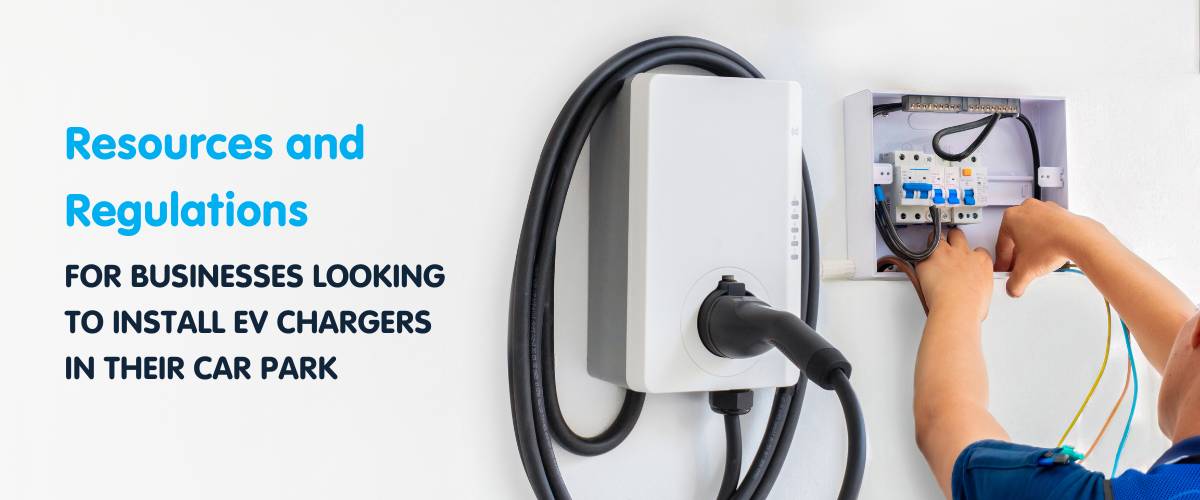
Resources and Reference Documents for Businesses Looking to Install EV Chargers in Their Car Park
We have collected all relevant resources and regulatory documents that you may find insightful and useful when planning your electric vehicle charger installations. This is specifically aimed at businesses, and are just some of the core regulations and guides outlined by the UK Government which we advise reading.
Public Charge Point Regulations 2023
Public Charge Point Regulations 2023 Guidance (official GOV.UK)
https://www.gov.uk/government/publications/the-public-charge-point-regulations-2023-guidance/public-charge-point-regulations-2023-guidance
Regulations: public charge points (eligibility and operator obligations)
https://www.gov.uk/guidance/regulations-public-charge-points
Approved Document S – Building Regulations
Approved Document S: Infrastructure for charging electric vehicles
https://www.gov.uk/government/publications/infrastructure-for-charging-electric-vehicles-approved-document-s
Approved Document S: EV charging FAQs (clarifications for developers)
https://www.gov.uk/guidance/approved-document-s-infrastructure-for-charging-electric-vehicles-frequently-asked-questions
Fire Safety Guidance for Covered Car Parks
Covered car parks: fire safety guidance for electric vehicles
https://www.gov.uk/government/publications/covered-car-parks-fire-safety-guidance-for-electric-vehicles
Smart Charge Point Regulations
Regulations: electric vehicle smart charge points
https://www.gov.uk/guidance/regulations-electric-vehicle-smart-charge-points
Guide to EV smart charge point compliance (PDF)
https://assets.publishing.service.gov.uk/media/628ce214e90e071f653a494a/Guide-to-evscp-regulations-2021-V2.1.pdf
Additional Documents You May Find Useful
GOV.UK – EV infrastructure and transport decarbonisation
https://www.gov.uk/government/collections/electric-vehicle-charging-infrastructure
Electrical Safety Standards
https://www.gov.uk/government/publications/electrical-safety-standards-in-the-private-rented-sector